Many beginners ask: what materials are used to make a doll, and which ones really matter at the start?
Imagine: you decide to create a doll, go to a shop to buy some materials and see endless shelves with fabric. And here the panic starts: which one to choose? You don’t want to spend hours of your time in a shop and a fortune on supplies only to realize later that something was wrong and the doll doesn’t look the way you imagined.
Most beginners have trouble choosing fabric, and for a good reason: fabric is the most visible and most irreversible choice. But in reality, a beautiful handmade fabric doll depends on several materials working well together, not just the fabric alone.
Let’s start with fabric and then walk you through all the essential materials you need, so you can shop confidently without overbuying. I’ve been making fabric dolls for more than 15 years and tested many of these materials in real projects.
Fabric for Doll Making: What Fabric Is Best for Cloth Dolls?
For most fabric and cloth dolls, a good-quality cotton is the safest and most reliable option, especially if you’re just starting with fabric doll making.
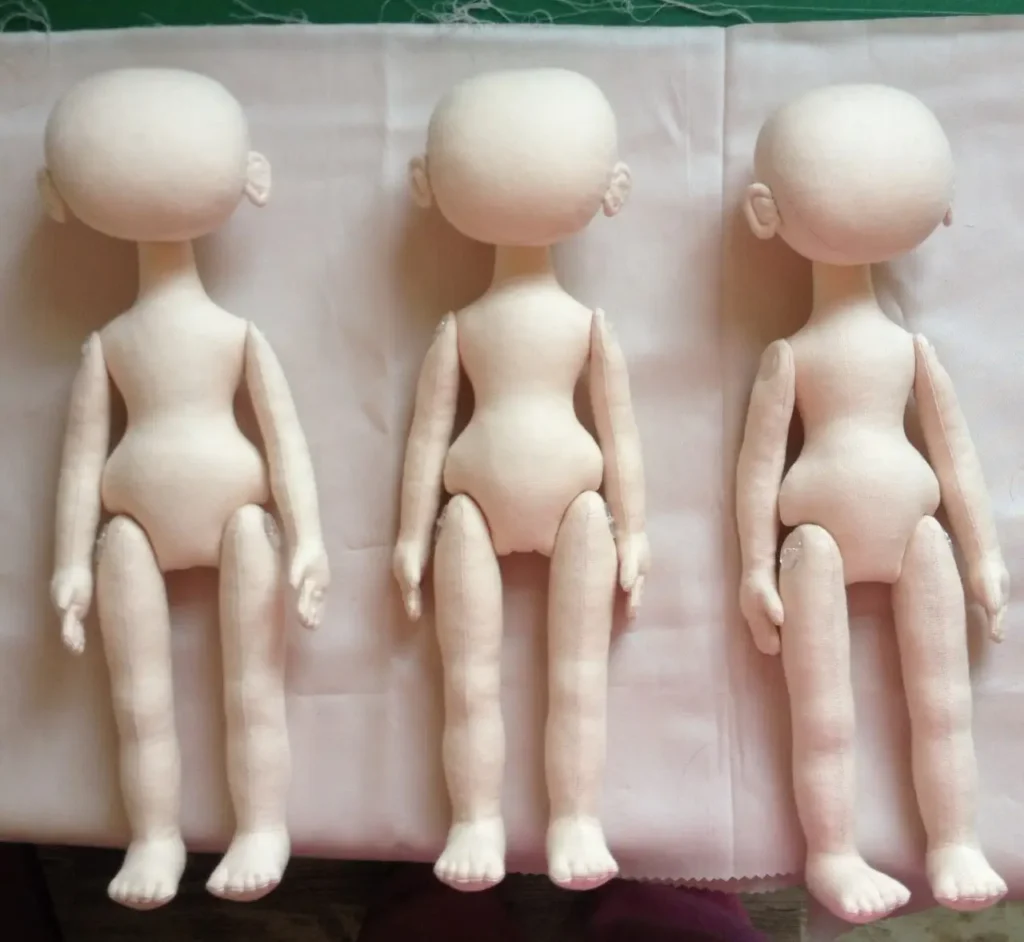
The most important rule when choosing fabric is: when the doll is stuffed, no fibers from the stuffing should come out through the fabric.
To achieve that, you should choose a fabric that is dense, not loose, and not too thin. Natural fibers are a good choice as they don’t fray much, are safe for kids and serve as good canvas for drawing doll’s face. In practice, dense cotton and sometimes cotton satin works very well. It is smooth, fairly dense, doesn’t fray excessively, and is often suitable for the doll’s skin.
You’ll find many websites selling special cloth doll fabric made specifically for dolls. Personally, I’ve never felt the need to use it. Likely because the dolls I make have flat faces, where shadows and highlights create the visible volume of facial features rather than sculpting. I’ve also found an affordable cotton that consistently meets my needs. That said, if you’re making dolls with felted or sculpted faces, you’ll usually need a stretchy fabric. But that’s a completely different technique and outside the scope of this blog.
Practical Shopping Advice
Before buying large amounts, choose your doll style first. For the majority of fabric dolls, a dense, good-quality cotton will work wonders. Buy small fabric pieces instead of meters, test how they behave when stuffed, and see which one gives the smoothest result.
Check the bedding fabric section! Cottons there are often dense enough and more affordable. This approach saves money, reduces frustration, and helps you build confidence before committing to larger purchases.
In short: for most fabric and cloth dolls, a dense, good-quality cotton is the safest and most versatile choice. Choose your doll style first, test small fabric pieces, and make sure the stuffing does not show through the fabric.
Stuffing for Fabric Dolls: What Is the Best Option for Beginners?
When beginners think about materials for doll making, they often focus only on fabric. But stuffing plays an equally important role. It determines how smooth the doll’s body looks, how well it keeps its shape, and whether the fabric shows lumps or uneven texture. Even the best fabric for doll making can look disappointing if the wrong stuffing is used or handled incorrectly.
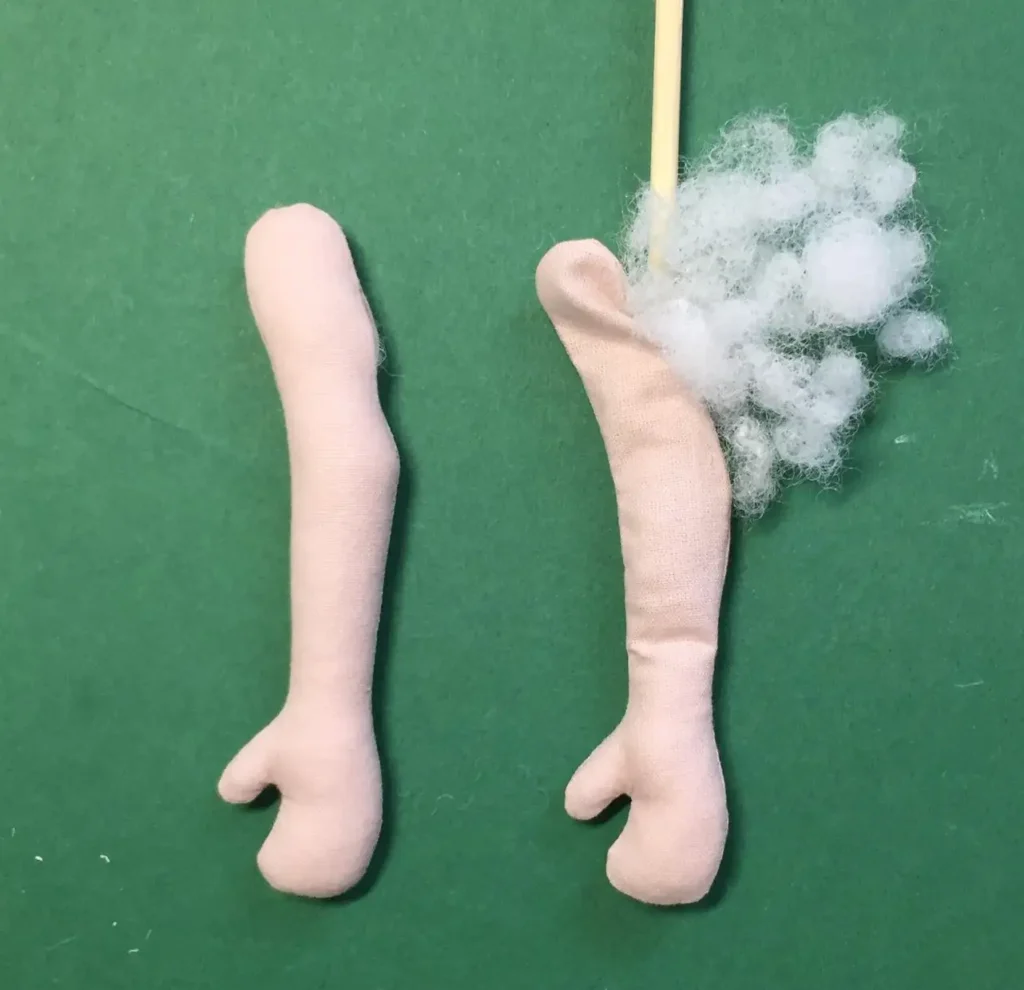
For fabric and rag dolls, the two most common options are holofiber and syntepon. Although both are synthetic fillers, they behave very differently inside a doll.
Holofiber is generally the best stuffing for dolls, especially for beginners. It is made of fine hollow fibers that trap air, which makes it lightweight, elastic, and resilient. This structure allows holofiber to spread evenly inside the doll and bounce back into shape instead of clumping. In practice, this means smoother doll bodies, fewer visible bumps under the fabric, and noticeably less “cellulite” effect. Holofiber is also breathable, moisture-resistant, and keeps its volume well over time, which is why many doll makers prefer it for cloth dolls. Last but not the least, it is anti-allergic.
Syntepon is more affordable and widely available, but it requires more effort to use correctly. Before stuffing, you must tear syntepon into very small pieces; otherwise, it forms hard lumps inside the doll. This tearing process creates a lot of mess, releases fine fibers into the air, and can feel uncomfortable to breathe. Therefore I strongly recommend wearing a face mask. Because syntepon compresses more easily and is harder to distribute evenly, beginners often struggle to achieve a smooth result with it.
Practical Shopping Tip
Holofiber sold in specialized craft shops is often expensive for the amount you get. A simple and cost-effective alternative is buying a pillow filled with holofiber (for example, from IKEA) and using it as stuffing. You usually get the same type of filler in a much larger quantity, which offers better value for money.
In short: holofiber is the easiest and most reliable stuffing for fabric dolls, especially for beginners, because it spreads evenly and creates a smoother body. Syntepon can work, but it requires more preparation and is harder to control.
What Materials Can Be Used for Doll Hair on Fabric Dolls?
Choosing the right doll hair material depends on the look you want, your budget, and how much experience you have. There is no single correct option, but some materials are much easier to work with than others, especially for beginners making fabric or cloth dolls.
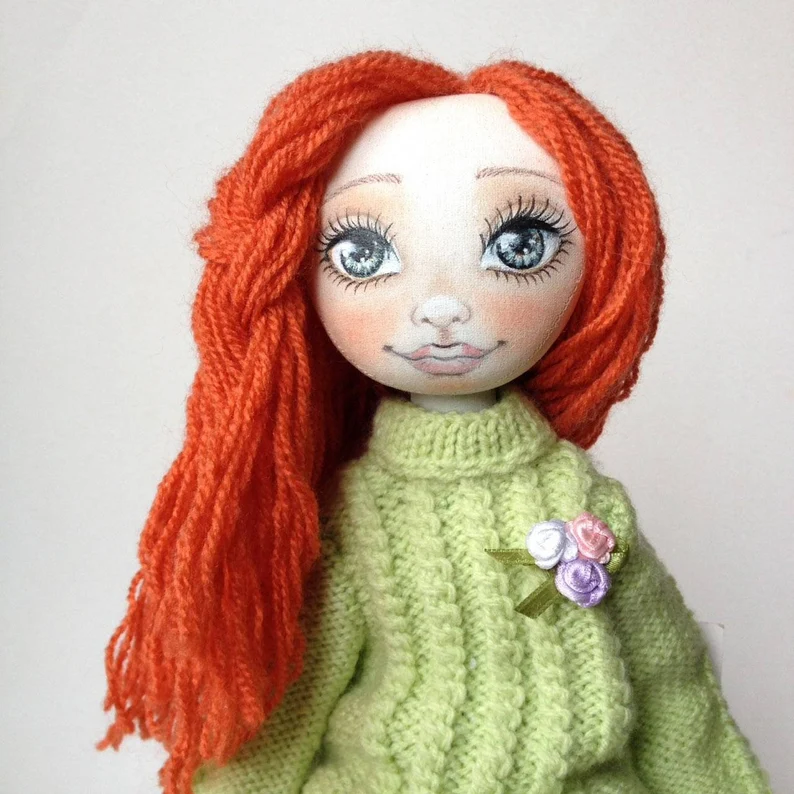
One of the most popular choices is yarn for doll hair. It’s affordable, easy to find, and beginner-friendly. If you don’t plan to brush it, almost any yarn can work. For a more natural look, doll makers brush 100% acrylic yarn and straighten it with a hair straightener, creating soft, silky hair. Keep in mind that you can’t get long hair using this method, as it’s limited by the fiber length.
For a more polished or professional finish, some makers use synthetic doll hair fibers such as saran, kanekalon, or nylon. Always choose fibers that manufacturers make specifically for dolls, as synthetic hair intended for humans is usually too thick and looks unnatural at a small scale.
Natural fibers like mohair or alpaca are another option. They are more expensive but very soft, easy to style, and often used for high-end art dolls.
Here are some examples of doll hair made of natural fibers:
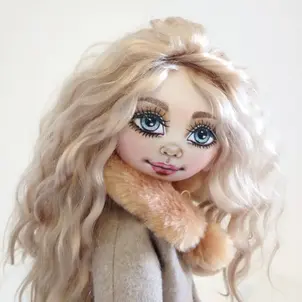
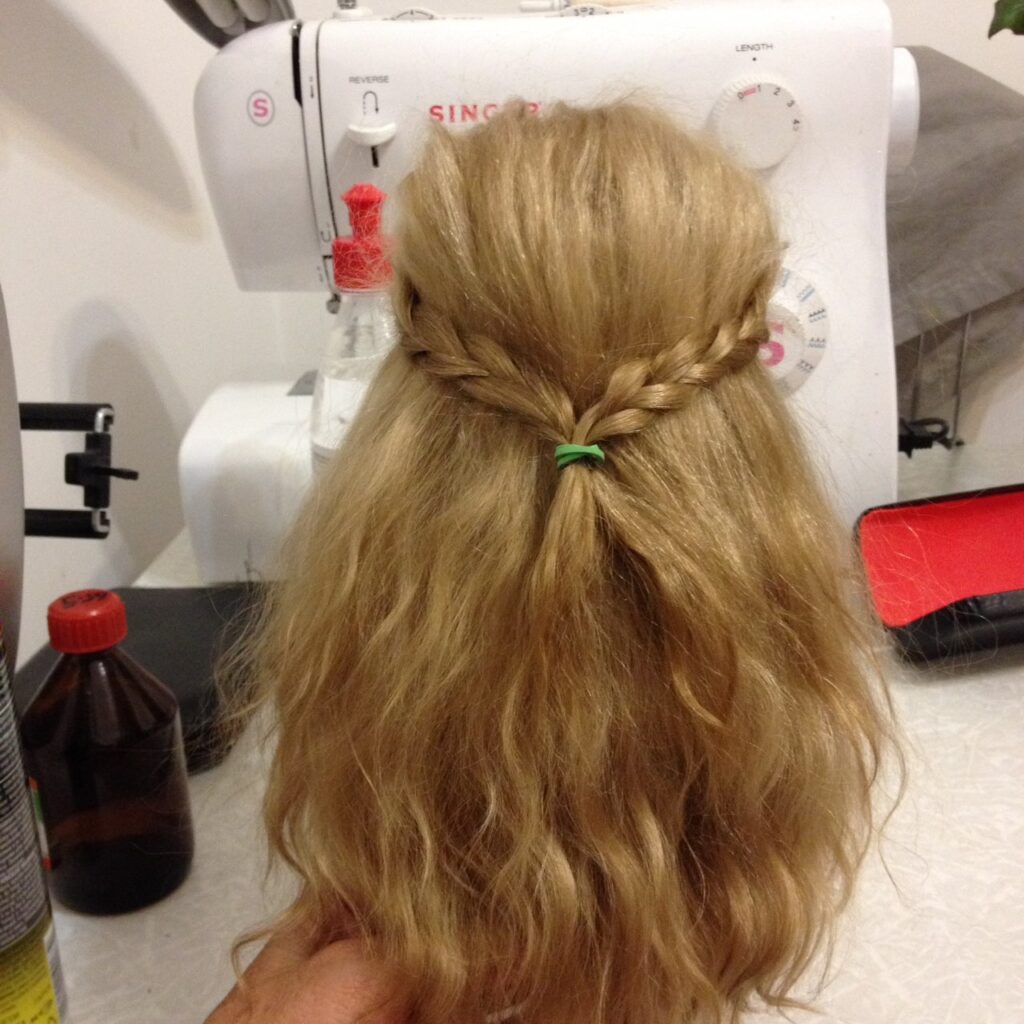
In short: yarn is the most beginner-friendly option for doll hair, while synthetic fibers and natural materials like mohair or alpaca are better suited for specific styles or more advanced projects.
If you’d like a detailed comparison of all doll hair materials, including pros, cons, and beginner tips, I have put together an extensive guide, backed by more than 15 years of trial and error in creating dolls, which I’ll share in this blog soon.
Materials for Doll Face: Painting, Embroidery, and Other Beginner Options
Just like with doll hair, there are several ways to create a fabric doll face, and the right choice depends on the style you want and how comfortable you feel trying new techniques. The most common approaches include embroidery, paint, markers, and ready-made elements, each with its own learning curve.
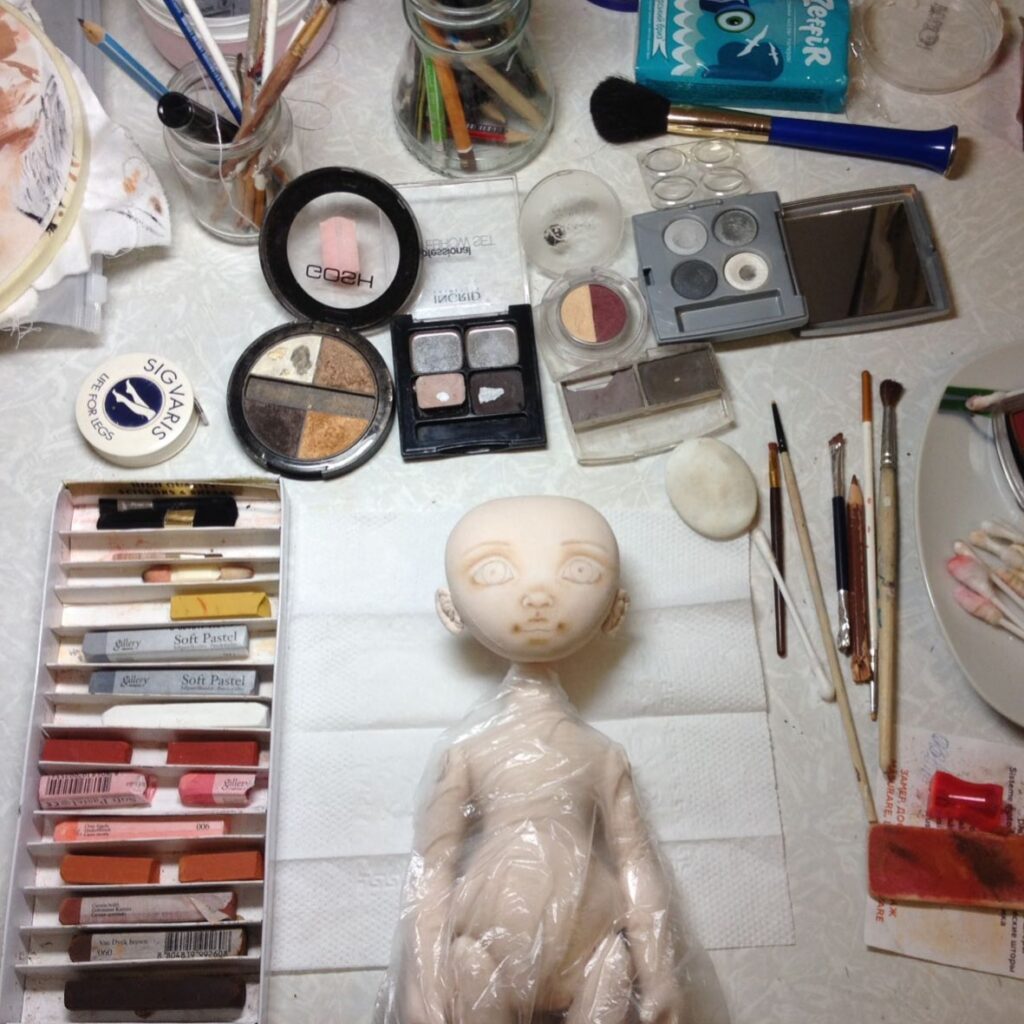
One option is to embroider the doll face using embroidery thread. This works well for simple, minimalist faces and requires basic embroidery skills. Another popular method is to draw the doll face using acrylic paint or textile paint for eyes and lips – this is my preferred approach for fabric dolls. For cheeks and soft shadows, pastels or crayons work well and give a gentle, natural blush. An easier alternative for beginners is using thin textile markers; they produce a result similar to paint but are often more controllable and forgiving.
If you want to keep things very simple, you can use ready-made plastic eyes and eyelashes or iron-on transfer stencils for eyes and lips. These options save time but you may find it to size correctly for your doll. For a more playful or grunge look, you can also use buttons as doll eyes. Ultimately, the best materials for a doll face depend on the character you’re creating and how eager you are to experiment.
In short: doll faces can be embroidered, painted, drawn with markers, or made using ready-made elements. The best choice depends on your doll’s style and how comfortable you are experimenting with new techniques.
If you’d like to learn how to draw a doll face, I plan to create a detailed step-by-step guide, so stay tuned! and check this blog from time to time 😉
If you are curios to see other dolls made by me, please check them out on this page here.
Final Thoughts on Doll Making Materials
Choosing materials doesn’t have to be overwhelming or expensive. Once you understand what really matters – fabric density, stuffing behavior, and how different face and hair materials work – shopping becomes much simpler and more intentional.
Start with small amounts, test your materials, and choose options that match the style of doll you want to create. For most fabric dolls, a few well-chosen basics are more than enough to achieve a beautiful result.
If you’d like to go deeper into specific areas, such as doll hair or doll faces, the linked guides above will help you explore materials and techniques step by step without guesswork or unnecessary purchases.
If you want learn how to make a blank rag doll step by step, please check this guide here: